
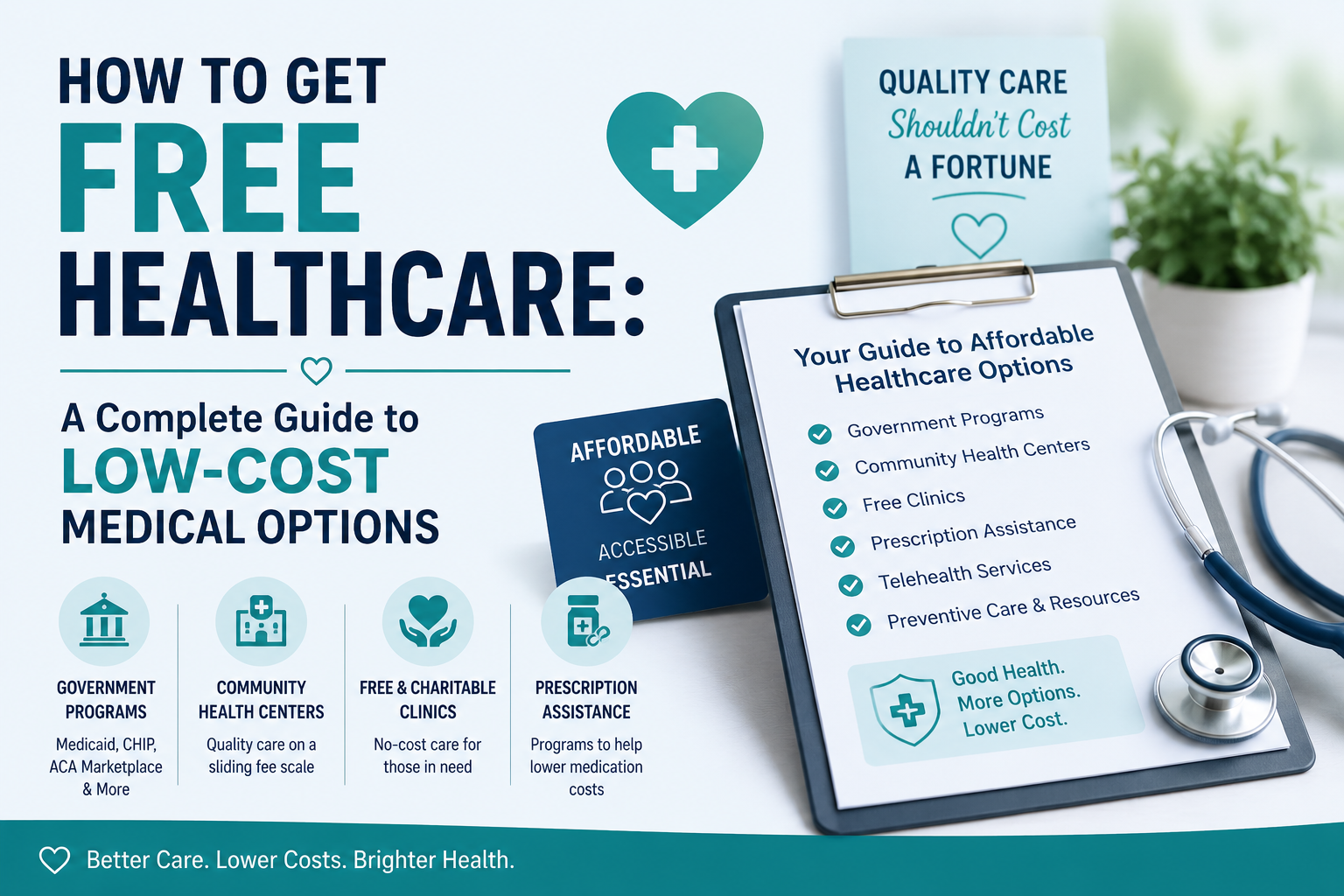
Medical debt is the number one cause of bankruptcy in the United States. If you are worried about how to pay for a doctor visit, you are not alone. Millions of Americans struggle with healthcare costs every year. But here is the good news: you have more options than you think. From free clinics to government programs to hospital discounts, there are real ways to get medical care without going broke. This guide walks you through every option available so you can get the care you need.
1. Community Health Centers: Free and Low-Cost Care Near You
Community health centers are one of the best-kept secrets in American healthcare. These clinics receive federal funding to provide medical, dental, and mental health care on a sliding fee scale. That means you pay what you can afford based on your income.
There are more than 15,000 community health center locations across the United States. They serve over 30 million patients each year. Many offer same-day appointments and walk-in hours. Services include checkups, immunizations, prescription medications, lab work, and chronic disease management.
Some centers also offer discounted or free dental care, vision screenings, and behavioral health counseling. To find a center near you, visit the HRSA Find a Health Center tool. You can search by zip code and see which services each location offers.
Most community health centers accept Medicaid and Medicare. If you do not have insurance, they will still see you. Your bill is based on your household income and family size. A visit could cost as little as $20 or even nothing at all.
2. Medicaid: Free Health Insurance for Low-Income Individuals and Families
Medicaid is a joint federal and state program that provides free or very low-cost health insurance to eligible low-income adults, children, pregnant women, elderly adults, and people with disabilities. It covers doctor visits, hospital stays, prescriptions, preventive care, and more.
Medicaid eligibility varies by state. In states that expanded Medicaid under the Affordable Care Act, adults earning up to 138 percent of the federal poverty level can qualify. That is about $20,783 for an individual or $43,056 for a family of four in 2026. In non-expansion states, eligibility is more limited but still available for certain groups like children, pregnant women, and people with disabilities.
You can apply for Medicaid at any time through the Health Insurance Marketplace at Healthcare.gov or directly through your state Medicaid agency. There is no open enrollment period for Medicaid like there is for private insurance. If you qualify, coverage can start immediately.
To check if you qualify, use the Healthcare.gov eligibility tool. It takes about 15 minutes and gives you an instant answer. If you need help applying, you can talk to a trained navigator or enrollment assister in your area for free.
3. Hospital Charity Care: Free or Discounted Hospital Bills
Did you know that nonprofit hospitals are required by law to offer financial assistance? This is called charity care or financial assistance. If you need emergency or necessary medical treatment at a hospital, you can apply to have some or all of your bill forgiven.
The Affordable Care Act requires all nonprofit hospitals to have a written financial assistance policy. They must tell patients about it and help them apply. Charity care can cover everything from emergency room visits to surgeries to overnight stays.
To get charity care, you typically need to provide proof of income and fill out an application. Most hospitals forgive bills for patients earning up to 200 or 300 percent of the federal poverty level. Some even cover fully uninsured patients regardless of income.
Always ask for the hospital financial assistance application before paying any bill. You can often apply even after you have received treatment. If approved, the hospital will reduce or eliminate your balance. This applies even if you have insurance but the bills are too high.
4. Free and Low-Cost Clinics: Local Options for Immediate Care
Beyond community health centers, there are thousands of free clinics run by nonprofit organizations, religious groups, and local health departments. These clinics offer basic medical care at no charge. Some are walk-in only, while others require appointments.
Free clinics often specialize in specific services like immunizations, women health, or chronic disease management. Many also offer free health screenings, blood pressure checks, and cholesterol tests at community events.
Planned Parenthood and similar organizations provide low-cost reproductive health services, including birth control, STI testing, cancer screenings, and prenatal care. Fees are based on income, and many services are free for low-income patients.
Your local health department is another excellent resource. Most county health departments offer low-cost or free vaccinations, STD testing, tuberculosis screening, and family planning services. Some also run dental clinics and offer blood pressure and diabetes screenings.
5. Prescription Assistance Programs: Getting Your Medications for Free
Prescription costs can be overwhelming, but help is available. Patient assistance programs (PAPs) are run by pharmaceutical companies and nonprofit organizations. They provide free or deeply discounted medications to people who cannot afford them.
NeedyMeds and RxAssist are two major databases that list thousands of assistance programs. You can search by medication name to find programs that cover your specific prescription. Many programs require a simple application and proof of low income.
Some major retail pharmacies also offer discount programs. Walmart $4 prescription list includes hundreds of common medications. Costco and CVS have similar programs that do not require membership or insurance.
If you take multiple medications, ask your doctor about generic alternatives. Generic drugs cost 80 to 85 percent less than brand-name versions and are just as effective.
6. Free Preventive Care and Screenings
The Affordable Care Act requires most insurance plans to cover certain preventive services at no cost to you. This includes blood pressure screenings, cholesterol tests, cancer screenings, vaccinations, and well-woman visits. Even if you have a high-deductible plan, these services are free.
If you do not have insurance, many of these same services are available for free through community health centers and local health departments. Annual flu shots are often available at pharmacies or community events for free or less than $20. Mammograms and colon cancer screenings are available through state programs for uninsured women and men.
Many employers and community organizations offer free health fairs with screenings. Watch for events at local hospitals, churches, and community centers. These can save you hundreds of dollars in preventive care costs.
7. How to Apply for Free Healthcare: Step-by-Step
- Check if you qualify for Medicaid first. Go to Healthcare.gov or your state Medicaid agency website. This is the most comprehensive option.
- Find a community health center near you. Use the HRSA Find a Health Center tool. Call ahead to confirm they offer sliding fee services.
- Search for free clinics in your area. Use the NeedyMeds clinic directory or search for free clinic plus your city name.
- Contact local hospitals about charity care. Ask for the financial assistance department. Request an application even if you already have a bill.
- Check for prescription assistance. Search NeedyMeds or ask your doctor about patient assistance programs for your medications.
Frequently Asked Questions
Can I get free healthcare if I have no income?
Yes. If you have no income, you likely qualify for Medicaid in states that expanded the program. You also qualify for the lowest sliding fee rates at community health centers and free clinics.
What is the difference between a free clinic and a community health center?
Community health centers are federally funded and offer comprehensive care including dental and mental health on a sliding fee. Free clinics are typically run by volunteers and offer basic medical services at no charge but may have limited hours and services.
Can I get free dental care?
Yes. Many community health centers offer dental services on a sliding fee. Some free clinics also provide basic dental care. Your local dental school may offer low-cost cleanings and procedures performed by students under supervision.
What if I need to see a specialist?
Community health centers can refer you to specialists who also work on a sliding fee. Some specialists at teaching hospitals may see patients for reduced rates. You can also contact the doctor office directly and ask if they offer a cash discount or charity care.
Does the government offer free health insurance for low-income adults?
Yes, through Medicaid. In expansion states, nearly all low-income adults qualify. In non-expansion states, coverage is more limited but still available for certain groups. You can apply anytime at Healthcare.gov.
Conclusion
You do not have to choose between your health and your finances. Free and low-cost healthcare options are available in every community. Start with community health centers and the Medicaid application. These two options alone can cover most of your medical needs. Remember, hospitals must offer charity care, and prescription help is out there. Take it one step at a time, and do not be afraid to ask for help.